Wednesday, October 3, 2012

Why was the range closed......

The range area was closed this week due to the need to cross the entrance road with the mainline of irrigation.  The line was one of the larger pipes to feed the course from three up to the upper booster station.  As you can see we never know what we will encounter digging under the course.  In this case a large section of rock was found right under the drive in at the gates and we had to employ as jackhammer to get the pipe in the ground.

We moved the location of the mainline to follow the property line to make way for future renovations to the members parking area.  Currently the main irrigation piping goes directly under the parking area, and if we had done the same we would have needed to move this line in the future to facilitate any attempt to improve the range parking lot.  We apologize for any inconvenience during this time.

Rock under driving range entrance

Thursday, September 20, 2012

Annual Bluegrass Weevil


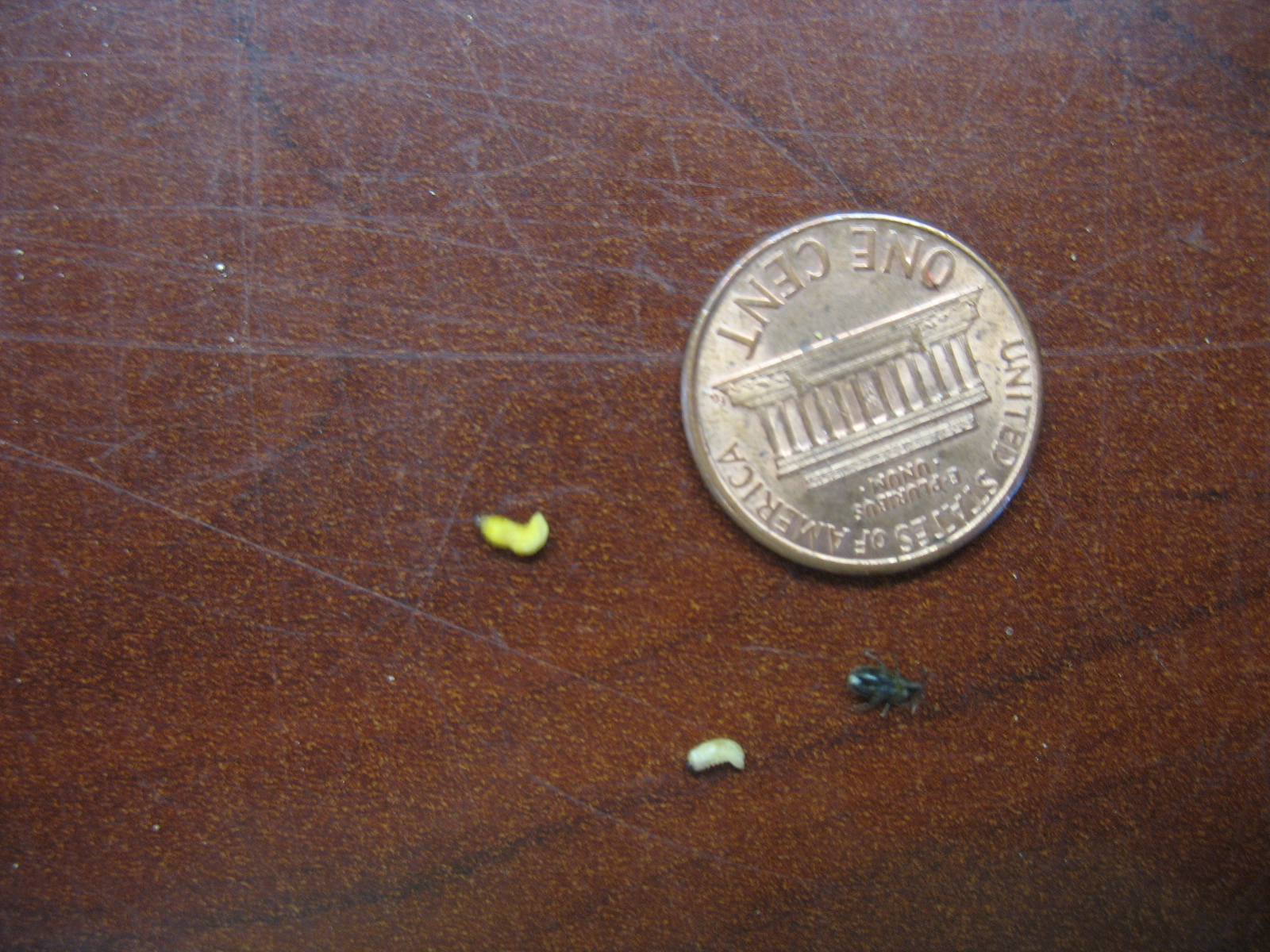
The annual bluegrass weevil or known to us turfheads as ABW's, is a new pest to our area.  It's one we have studied for years as we have seen it destroy turf in the Northeast region (New York and Connecticut).  This little pest was known for it's ability to survive winters and attack Poa annua on shortcut areas (greens, tees, edges of fairways) in the spring and early summer.  The adults would lay eggs, the nymphs burrow into the turfgrass stem causing damage then move into a larva stage and act like a small white grub feeding on roots until it's time to move forward into an adult.  All three stages are seen above.

Usually the damage is light and seen when the temperature rise.  We have been on the lookout for the past several years on the edges of our poa greens and never seen any activity.  As they have progressed down the coast a new issue has become evident.  This pest now has adapted to bentgrass as well as poa grass.  In addition, poa is attacked in the spring, but bentgrass is the choice in our summers.

Why is this so important, well these pests are the reason for the damage to the approach to 8 green as well as the tees at 9 and 14.  What we took for wilt and heat stress was weakened turf from the weevil damage, which is prevalent when the temperatures become extreme and the turf under a lot of stress.

As you can see from the size, it is like finding a needle in a haystack.  We have been advised that subsequent years are worse than the initial infestation.  We are taking preventative measures by adding control programs to the budget for next year, but in many cases it's just hard to beat nature when it comes to defeating all the variables thrown at you.   These issues are heightened when we get summers that exceed normals and turfgrass is pushed to the limits of it's recuperative potential.

Why is the rough so Rough?


This has been the year of years for rough grass.  Almost all the issues for the rough are tied to disease.  This happened over the past 4-5 weeks and was caused by one of three primary agents.  The shorter cut rough around collars and fairways was die back from Grey Leaf Spot on ryegrass.  Largest outbreak since WGCC abandoned ryegrass fairways and switched to bent grass.  The kentucky bluegrass and tall fescue of the rough was taken down by  summer patch and brown patch.

In all cases these diseases were widespread not only at our course but many across the area.  Almost no one was immune to the loss from these three diseases.  I know of some on preventative spray programs that suffered loss due to shortened residual activity due to the extreme environmental pressure.  This year was the hottest on record and the 3rd driest, so combining that with an unusually humid August set up a whammy that many of our older variety of grasses could not survive,   I have submitted a budget that includes preventative sprays for some of the diseases in the rough next year given that we may be able to better help the grass there with irrigation.  

Many of the shortcut areas that survived are sections that we began planting to newer varieties of rye and tall fescue that are bred with some disease resistance.  Our plan for recovery is to start next week with wholesale seeding of newer varieties into the close in rough to establish better tolerance and try to manage these with chemicals and irrigation.  Overseeding is only 20% or so effective when trying to seed into existing stands, but we hope with time to introduce these better varieties into the rough.  The area sodded to the right of 3 fairway past the bridge is some of the newer varieties of tall fescue and it maintained it's integrity extremely well, even mowed low in the short cut.

Many question why we did not spray the rough.  The short answer is that unless you are on an active preventative program the timing and products are too late to be of much help.  In a way, we just eliminated a lot of very weak grass that we can replace with a stronger variety.  We are not alone with this issue and I have some information of the WGCC website in the USGA section detailing issues with the various grasses in our region

The tees at 9 and 14 are different matters, as is the approach at 8.  All these areas were affected by an insect known as the annual bluegrass weevil (ABW).  This weevil is new to Virginia and extremely destructive.  It has been a Northeast pest that primarily attacked Poa annua, or at least that's what was presumed.  Sometime in the last few years, this pest has mutated to attack poa in the spring and then turn onto bent grass as a source of food in the later generations.  With 4-5 generations a year this pest keeps giving and giving.  Anyway,  outbreaks can be a nuisance and controlled, but unless preventatively controlled, outbreaks are not seen until large scale damage has occurred and this is not typically severe unless long periods of heat and drought are in effect to also weaken the insect laden turf.  We are also proposing a strategy to combat this pest next year with preventative sprays.  As in all previous cases once established this pest has outbreaks stronger in the following years.

In addition, both 9 and 14 tees are extremely small with heavy divot pressure.  We are looking at using some of the newer varieties of bermuda sod in both these areas to help hold up to the heavy traffic and heat in these small spots.

The clubhouse viewing area has been overrun by bermuda, so the hotter and sunnier the better.  Unfortunately that look will not be so green come winter, in which painting might be the best answer to be presentable, but when summer sun and heat arrive it looks great.  There are no known remedies for Bermuda control in cool season rough except extreme chemical measures and those are mostly used when a complete stand of tall fescue is sodded and you can start fresh.

Tuesday, May 29, 2012

What happened to 8 green!

Many of you will notice that there is a large scar across the back of 8 green.  It seems like something is always happening at this green.  After the thinness of last year from being a immature surface and the effects of traffic especially along the walk-on and off areas, we decided this green needed a little push.  By this I mean we needed to get a cushion built up to absorb the everyday foot traffic that our older greens have generated over the years.  This mat layer developed nicely over the winter and the green has held up well to this point.

Recently when we started to bring this green down to the heights of the other greens we started to experience a scalp of the surface.  This is an indication that the green has become too thatchy and needs dilution with topdressing.  Although we have been very regular on this program a few weeks of wet and warm weather, the green like the rough came alive and got thicker than we could handle.

Today we double verticut the surface and removed a lot of excess material in that layer.  This was followed by  heavy topdressing and mowing.  In an effort to see if the surface could tolerate the lower heights a mower was run across the surface on the back of the green  As you can see, it scalped the area.  This damage will be visible for a while, but should not affect putting quality.  There is a lot of grass in this surface and coupled with the generous mat layer, this area should recover in a week or two, just about the same time that we should have this surface mowing the same as all the others on the course.

I know it seems that 8 is troublesome, it has after all been rebuilt 3 other times, but I think once we get this area stabilized we will all see what kind of putting surface it can be and how it truly plays.


Tuesday, May 15, 2012

Rough Times


Well needless to say the topic on everyones lips is "How about that rough".  I want to address the concerns and facts about the rough on our course.

First we do cut the rough.  In fact we spend nearly 160 hours a week mowing the rough.  It takes us 2.5 days to mow the entire course and we do this twice a week every week when it is growing.  We also have an array of push mowers, string trimmers, and hill climbing mowers to accomplish all the other rough tasks necessary to prepare for play.

If we lose time to rain, member events, shotguns etc, we are losing that needed time to get through all the mowing tasks.  Noise ordinances make it difficult to mow on the weekends, as well as trying to keep the one quiet time to play intact.  The amount of mowing that could be performed if allowed would not make much of an impact.

Secondly, we have 6 different types of grass growing at any one time in the rough sections of the course.  Within these types there are many varieties of different texture and density that have been introduced over the years.  This makes the nature of a uniform and consistent rough almost impossible during the spring flush.

That last statement is whats happening right now, a spring flush.  We were unusually dry all spring and the warm weather and soil, combined with a few heavy rain events has made the soil active for growth.  This natural effect is evident by heavy, lush grass found across all varieties.  Some areas the ball sits up and other down all depending on the type of grass; Tall Fescue, Kentucky Bluegrass, Perennial Ryegrass, Poa annua, or Bermuda that different  areas support, and we have a lot of different areas and sun-shade interactions.

The height the rough is cut at never varies during the year.  A uniform 2.5 inches is set across a all the mowers, and as you can tell, when the flush slows down in June and all summer long the rough is never an issue on a normal basis.  This flush that always occurs at this time of year also coincides with the first great weather in the spring.  If we did not get this flush, I would be worried that something is wrong and a long year with sparse grass is ahead.

Many courses in the area have rebuilt over the years and now contain a uniform rough grass of one or two species.  This is not a comparable circumstance to ours, and unless there is a strong push to tear up the entire course in search of better rough grass, this issue will resurface every year, for a few weeks in the spring.  The rough has gotten better and more dense over the years, which leads to better conditions over the entire season, and that is the idea I would like to stress.  We are always looking at an entire season and planning for the next.  Variations will always occur on older properties like ours over time and thats what makes the game so challenging.  It's a natural environment that must be adjusted for every day, otherwise it would be like tennis.



Wednesday, May 2, 2012

Aeration Follow Up

As I stated before there are multiple reasons to aerify greens, and really all surfaces.  But in our shallow rooted greens the primary reason is to create pore space for roots.  It seems logical to think that all plants require air, but not only does the above ground part require this natural resource but the roots are really starved for this precious gas.

The roots of grass plants actually require oxygen, versus the leaves that utilize CO2 for photosynthesis.  So where am I going with this, well look at the picture below to see the effects a single hole has on the rooting of our pos annua.  The roots compete for space along with water and soil, which gets compacted from the mowings, rollings and general play.  That little pore space is squeezed pretty tight.  So when we open a free hole to air the roots follow.  It certainly seems like a lot of holes are put into the green, but in fact we only affect about 4-6% of the entire surface when we perform aeration.  That little amount is enough to help these shallow rooted plants thrive and begin to store enough nourishment to help it survive the long summer months.


Tuesday, May 1, 2012

New Additions

We lost a large River Birch during last years storm near the chipping green.  It was one of the last remaining 150 yard markers from the Lee Dieter days.  Although markers, lasers etc had made it obsolete it did provide some protection for those using the chipping green.

We looked at moving a couple of trees from the 16th hole, a practice I like since they already are accustomed to the location, but determined it was too late in the season to move the  trees safely.  In order to start a new screen, we had two medium sized Maple trees ( 5" caliper) spaded into place yesterday.  They are a variety known as Brandywine.  They should provide a fall color similar to the October Glorys on the right side of the hole.  The process went smoothly with minimal damage and luckily for us nothing was broken in the process.  They are male trees so we hope to avoid those messy whirlybirds in the spring.