Well again we have another weather event that nature throws our way..... Sandy. Although it could have been much worse, it still packed a wallop and hopefully was the final punch to a stressful year. Kind of like the children's tale, Earthquakes, Derachos, and Hurricanes.. Oh my! Here at the club we had winds that peaked around 50 mph and the rain gages averaged around 7.2 inches.
This combination with leaves and limbs has made a mess of the course. We lost one white pine between the 7th and 8th hole and created a new lake behind the 14th green. While pretty to look at is still is not enough to water the golf course.
We are diligently working to open the course with playable conditions. Many times in events like this the view from the club is beautiful, but the unseen holes are a mess. Most likely when we open the bunkers will still be washed out. Decisions are made on where to spend man-hours and the removal of leaves, limbs and water are more important. I would rather make it easier to find a ball by working on leaves than spend two full days raking bunkers.
We are always sorry when we have to close the course to play and we don't take it lightly. We hope the efforts put forth by the staff will result in an enjoyable round of golf than a frustration in ball hawking. In the future we would like to rebuild the bunkers with a material that will significantly reduce the time spent repairing bunkers after events like this and thunderstorms, but that topic is for another day.
Thursday, November 1, 2012
Thursday, October 18, 2012
Spectacular Starts
This was the other morning as we started aeration of the 16th and 18th greens. It rained on us later that day, but boy was the start a beautiful time of morning and great view to wake up with!
Irrigation Update
Well we are slowly heading into fall and the irrigation system is moving into Phase II. By the end of next week all the mainline piping will be in and buttoned down. Despite a lot of mess and construction, we are ahead of schedule and on budget at this point. This is not to say we haven't found a few items along the way. Old milk bottles, unknown pipes and drains and sometimes bigger items that change the plans on what we do that day. The picture here shows what happens when you run into a 48" concrete pipe a little over 18" in the ground.
The mainline pipe was already welded and ready to be put into the ground. Unfortunately we can't slide the pipe under it, it's just too big. So we needed to dig 7 feet down and splice our pipe under this obstruction. Many times when we plan out our disturbance for the day, we try to take into player movements and timing, but others like this just ruin all those plans.
We appreciate the patience while we perform this exhaustive task, we hope the disruption has not been too painful. The hole closing will begin later next week if the weather holds. Remember we will be closing one hole at a time to keep 17 open. Once we have completed the work, we open that hole and move on.
Too early to tell when completion will be, but this has been a great start to a very large project.
The mainline pipe was already welded and ready to be put into the ground. Unfortunately we can't slide the pipe under it, it's just too big. So we needed to dig 7 feet down and splice our pipe under this obstruction. Many times when we plan out our disturbance for the day, we try to take into player movements and timing, but others like this just ruin all those plans.
We appreciate the patience while we perform this exhaustive task, we hope the disruption has not been too painful. The hole closing will begin later next week if the weather holds. Remember we will be closing one hole at a time to keep 17 open. Once we have completed the work, we open that hole and move on.
Too early to tell when completion will be, but this has been a great start to a very large project.
Thursday, October 4, 2012
Aeration and Weather
There are many reasons for the aeration of greens. Many articles on it's importance have been written and the practice is one of the most discussed among golfers. Needless to say it is vital to the health of greens and if we were in charge it would be a practice done even more frequently. But the point of this discussion is the weather impact on aeration and how it effects playability. To gain a better understanding I will outline our procedures:
1. Greens are mowed, since we do not mow for several days afterward to reduce the impact of damaging mowers and grass from the abrasive nature of sand.
2. Aerifier is run across greens, pulling cores and using shovels to remove them off greens. We use a hollow tine with an inside diameter of 0.38". We effectively pull over 240,000 cores on an average green. This seems like a lot but actually only affect 4.72% of the surface area on the green. Of course they are all in the way between your ball and the cup!
3. Sand is then applied across the green. We will use somewhere between 25-40 tons of sand in this process. The sand must be very dry, if not we can severely injure the green while working with the wet sand. It is difficult to fill that many holes without the sand bridging across the top, which happens when using less than dry sand. It gives the appearance of a filled hole until the first rain, then the sand falls to the bottom. Our goal is to fill more than 85% of the holes to be effective during this large tine aeration at the edges of the season. Dry weather, dry greens and low humidity are the keys to helping this process be successful!
4. We next send a full brigade of staff to blow off excess sand or apply smaller amount to fill areas. After this we apply any fertilizer or minerals that are needed and water in.
5. We attempt to roll the green but we need to wait until the surface is dry so as to not pick up the sand and products we just applied. This is why we wait for several days before we begin mowing to allow all this to settle.
6. Pray for good weather to allow the healing to begin!
Wednesday, October 3, 2012
Why was the range closed......
The range area was closed this week due to the need to cross the entrance road with the mainline of irrigation. The line was one of the larger pipes to feed the course from three up to the upper booster station. As you can see we never know what we will encounter digging under the course. In this case a large section of rock was found right under the drive in at the gates and we had to employ as jackhammer to get the pipe in the ground.
We moved the location of the mainline to follow the property line to make way for future renovations to the members parking area. Currently the main irrigation piping goes directly under the parking area, and if we had done the same we would have needed to move this line in the future to facilitate any attempt to improve the range parking lot. We apologize for any inconvenience during this time.
![]() |
| Rock under driving range entrance |
Thursday, September 20, 2012
Annual Bluegrass Weevil
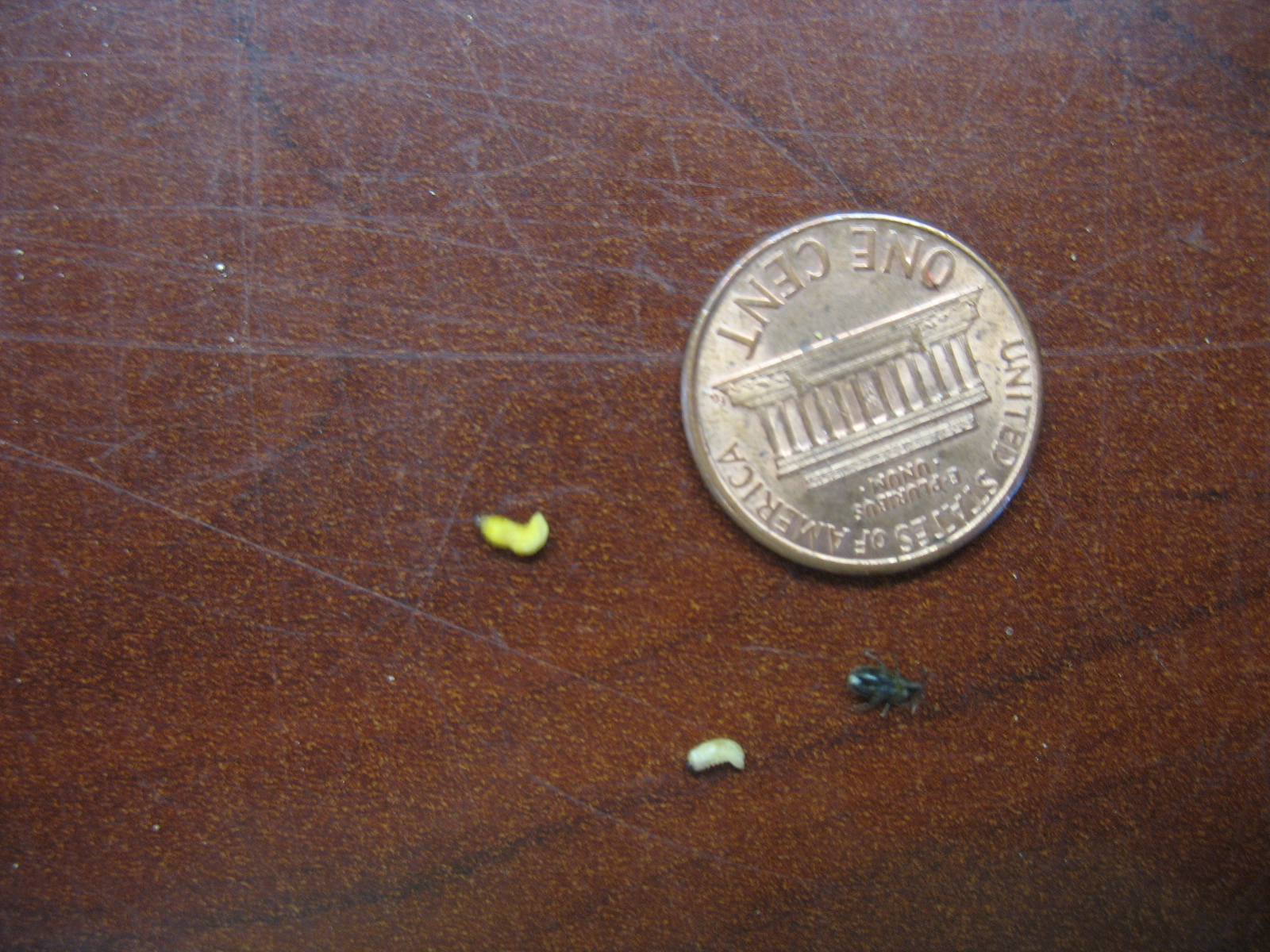
The annual bluegrass weevil or known to us turfheads as ABW's, is a new pest to our area. It's one we have studied for years as we have seen it destroy turf in the Northeast region (New York and Connecticut). This little pest was known for it's ability to survive winters and attack Poa annua on shortcut areas (greens, tees, edges of fairways) in the spring and early summer. The adults would lay eggs, the nymphs burrow into the turfgrass stem causing damage then move into a larva stage and act like a small white grub feeding on roots until it's time to move forward into an adult. All three stages are seen above.
Usually the damage is light and seen when the temperature rise. We have been on the lookout for the past several years on the edges of our poa greens and never seen any activity. As they have progressed down the coast a new issue has become evident. This pest now has adapted to bentgrass as well as poa grass. In addition, poa is attacked in the spring, but bentgrass is the choice in our summers.
Why is this so important, well these pests are the reason for the damage to the approach to 8 green as well as the tees at 9 and 14. What we took for wilt and heat stress was weakened turf from the weevil damage, which is prevalent when the temperatures become extreme and the turf under a lot of stress.
As you can see from the size, it is like finding a needle in a haystack. We have been advised that subsequent years are worse than the initial infestation. We are taking preventative measures by adding control programs to the budget for next year, but in many cases it's just hard to beat nature when it comes to defeating all the variables thrown at you. These issues are heightened when we get summers that exceed normals and turfgrass is pushed to the limits of it's recuperative potential.
Why is the rough so Rough?

This has been the year of years for rough grass. Almost all the issues for the rough are tied to disease. This happened over the past 4-5 weeks and was caused by one of three primary agents. The shorter cut rough around collars and fairways was die back from Grey Leaf Spot on ryegrass. Largest outbreak since WGCC abandoned ryegrass fairways and switched to bent grass. The kentucky bluegrass and tall fescue of the rough was taken down by summer patch and brown patch.
In all cases these diseases were widespread not only at our course but many across the area. Almost no one was immune to the loss from these three diseases. I know of some on preventative spray programs that suffered loss due to shortened residual activity due to the extreme environmental pressure. This year was the hottest on record and the 3rd driest, so combining that with an unusually humid August set up a whammy that many of our older variety of grasses could not survive, I have submitted a budget that includes preventative sprays for some of the diseases in the rough next year given that we may be able to better help the grass there with irrigation.
Many of the shortcut areas that survived are sections that we began planting to newer varieties of rye and tall fescue that are bred with some disease resistance. Our plan for recovery is to start next week with wholesale seeding of newer varieties into the close in rough to establish better tolerance and try to manage these with chemicals and irrigation. Overseeding is only 20% or so effective when trying to seed into existing stands, but we hope with time to introduce these better varieties into the rough. The area sodded to the right of 3 fairway past the bridge is some of the newer varieties of tall fescue and it maintained it's integrity extremely well, even mowed low in the short cut.
Many question why we did not spray the rough. The short answer is that unless you are on an active preventative program the timing and products are too late to be of much help. In a way, we just eliminated a lot of very weak grass that we can replace with a stronger variety. We are not alone with this issue and I have some information of the WGCC website in the USGA section detailing issues with the various grasses in our region
The tees at 9 and 14 are different matters, as is the approach at 8. All these areas were affected by an insect known as the annual bluegrass weevil (ABW). This weevil is new to Virginia and extremely destructive. It has been a Northeast pest that primarily attacked Poa annua, or at least that's what was presumed. Sometime in the last few years, this pest has mutated to attack poa in the spring and then turn onto bent grass as a source of food in the later generations. With 4-5 generations a year this pest keeps giving and giving. Anyway, outbreaks can be a nuisance and controlled, but unless preventatively controlled, outbreaks are not seen until large scale damage has occurred and this is not typically severe unless long periods of heat and drought are in effect to also weaken the insect laden turf. We are also proposing a strategy to combat this pest next year with preventative sprays. As in all previous cases once established this pest has outbreaks stronger in the following years.
In addition, both 9 and 14 tees are extremely small with heavy divot pressure. We are looking at using some of the newer varieties of bermuda sod in both these areas to help hold up to the heavy traffic and heat in these small spots.
The clubhouse viewing area has been overrun by bermuda, so the hotter and sunnier the better. Unfortunately that look will not be so green come winter, in which painting might be the best answer to be presentable, but when summer sun and heat arrive it looks great. There are no known remedies for Bermuda control in cool season rough except extreme chemical measures and those are mostly used when a complete stand of tall fescue is sodded and you can start fresh.
Subscribe to:
Posts (Atom)