Monday, July 7, 2014

If it's the fourth of July then there must be a storm

As usual whenever the 4th of July rolls around it means fireworks, both at the club and in the skies.  Once again we saw a beautiful night for the annual fireworks, and the night before we saw a bigger natural light display with high winds and storms that once again split a few trees and damaged some beyond repair.  One pine in particular on 16 was torn apart and required the assistance of a crew to remove the remnants.


In addition to the tree we had another mishap that added to the lore of events on the 4th.  One of the mortars used in the fireworks display misfired and landed in the WGCC shrubs and caught fire.  How extensive the damage is has yet to be determined, but the short term effect is a nasty scar along the top of the G.


One of the tell tale signs of summer for us is the heat and the bright sun.  Turf stress begins to show symptoms due to the weather.  It also gives clues to the stress seen by golfers.  If you notice you can see two footprints in green with surrounding brown turf.  The damaged turf is from using spray sunscreen to coat your legs and the overspray burns the turf.  We promote the use of sunscreen to protect yourself from the harmful effects of the sun, but to avoid this turf damage apply when standing on a cart path or other hard pan area.  Your skin will be protected and turf damage can be avoided.


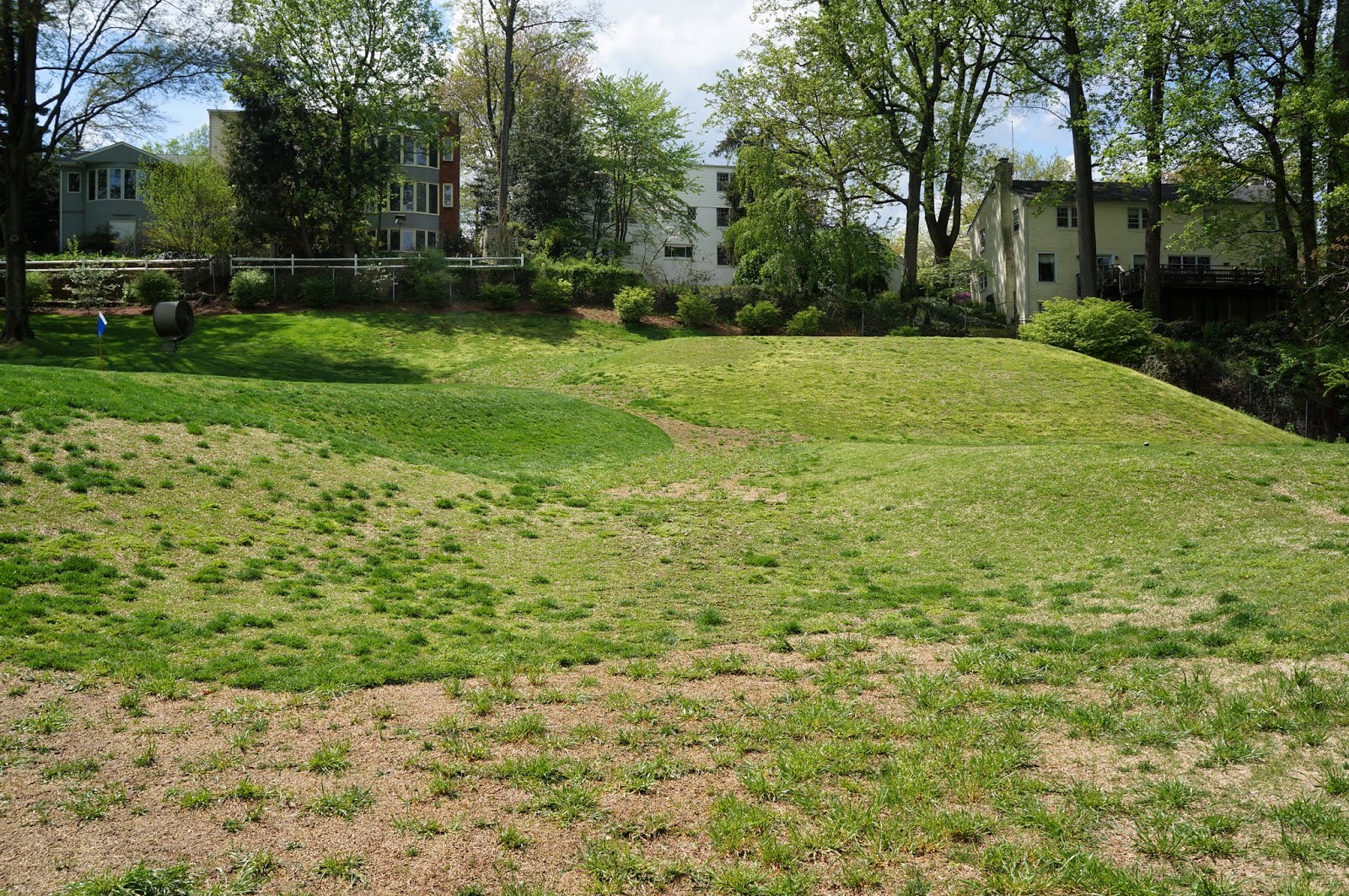
Many have inquired about the browned out grass area on the newly constructed bed above the 11th green.  When we developed this area we choose Zoysia sod to give us a low maintenance but attractive turf to reduce erosion on this hillside.  We also chose this warm season grass for its ability to take the southern exposure during the summer heat.  Unfortunately the first season we installed it was also one of the coldest winters in a long time.  The effects of a cold winter are seen in the picture below.  

Zoysia is a slow growing grass, and it would most likely recover in a year or two, but painfully slow for our needs.  We will be replacing this with a newer style Bermuda grass later this summer and try that approach.  Bermuda has the same tough characteristics and summer tolerance but with a hardier tolerance for extremes.  We will harvest the zoysia for use somewhere else on the course in an area that the slow recovery will not be so visible.




Saturday, May 10, 2014

Rough, yes it is.

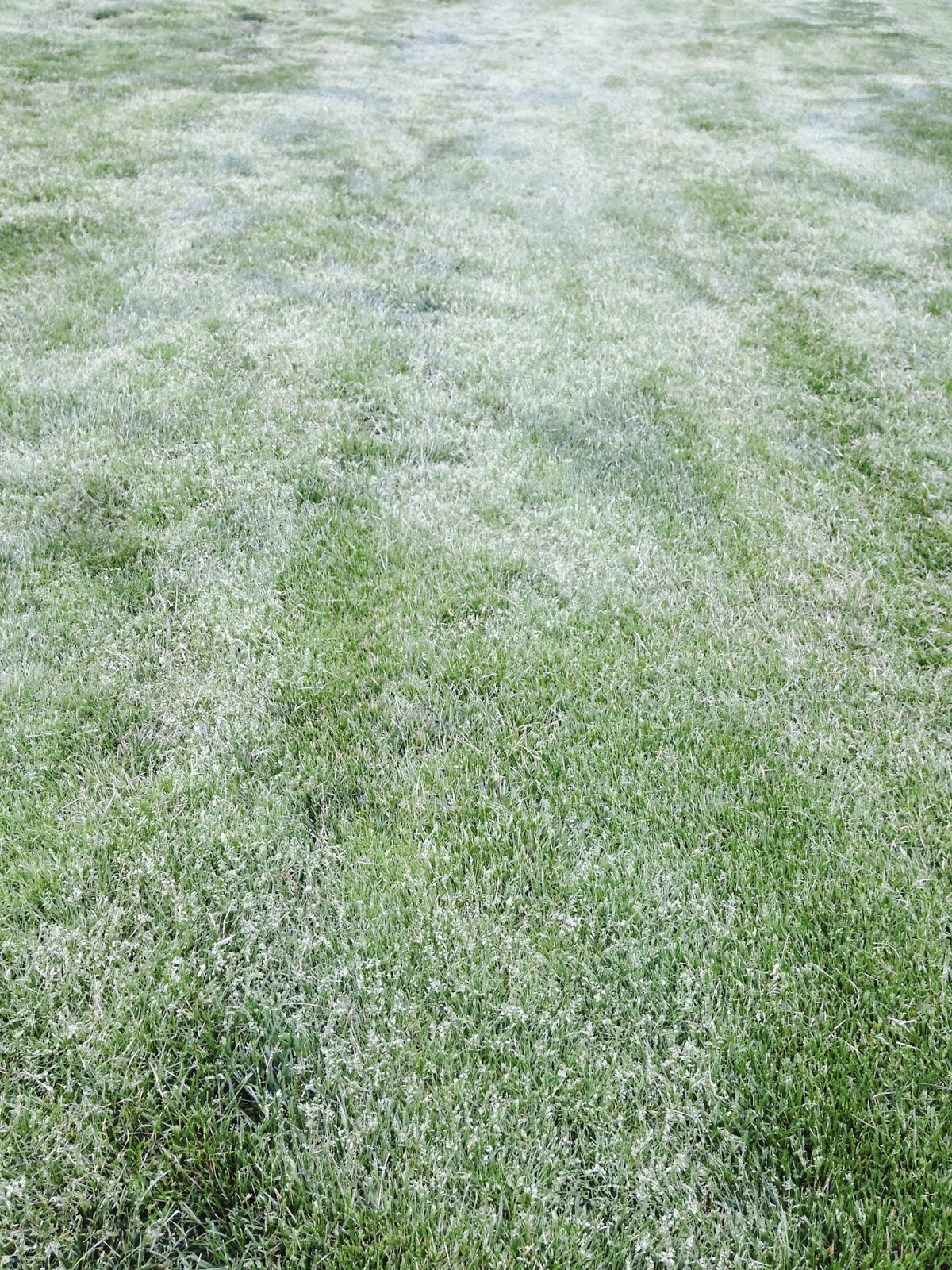
Well it is again that time of year to tune up your game and start to complain about the rough.  It is a universal truth that rough grass grows almost out of control at this time of year.  One of the challenges for us is the variety of grass in the rough, specifically Poa annua.  If you've played in the past week, or even had a drink on the back patio looking down on 18 it is a sea of patchy white looking grass.


All those white things are seed heads.  Similar to what we see on the greens, this grass is one of the few that will seed at our normal cutting heights.  It's the primary reason this grass is so tough to overcome is it's the ability to put out a tremendous amount of seed.  So much that it can overwhelm all our efforts to over-seed the rough.   In the fall we attempt to seed in desirable grasses, but at the same time we are opening the soil for new grass varieties we also make the soil available for all the Poa seeds to become planted as well.

In the case of this past fall, after we over-seeded the course the weather turned cool and wet.  These are perfect conditions for Poa annua, and since it was present as well as the tall fescue seeds, they thrived in conditions better suited for this obnoxious turf.  It germinates faster and establishes quicker, and the slow cool spring favored its development even more.

Products that attempt to take out Poa are available and we have them here, but imagine if we had damaged only 50% of the Poa, we would be playing on lots of bare ground.  Spring seeding is an iffy practice with the need to apply chemicals to prohibit crabgrass and goosegrass.  A timing conundrum,  over-seed and be overcome by weeds or wait and watch Poa take over. 

Sod is the best way to change out the turf, eliminate the competition and then treat the Poa when it is only a small percentage of the population.  An example of this change is behind the 14th green.


14th green  dark green is tall fescue
Tall fescue ringing the 3rd, look a the straight line short of the bunker and behind the green.
Some ask why don't we just cut the rough shorter.  Well Poa would still seed, just like the greens.  In addition we need to preserve as much root reserves for the desirable plants before summer stress begins.  All the other cool season grasses we have all want to be grown in the 2.5-3.5" range.  We mow regularly but during this period of cool, wet weather, the grass grows faster than we can keep up, especially as play and the golf calendar gets cranked up.  This flush of growth is not due to fertilizer applied this year but last falls applications to make the rough healthier.

There are many factors that go into the rough equation, but time and labor are the primary ones when the lush wet growth of spring begins.  Although we are busy with many aspects of a late arriving season, we are not neglecting mowing.  We are very aware of the conditions and putting as much manpower as possible into the operation.  It's a process we monitor very closely as golfers, neighbors and staff all have to occupy the same space for a limited number of hours and weather conditions.  Its a difficult puzzle to solve but we are working hard to make it one that everyone can enjoy.


Sunday, May 4, 2014

Winter... Spring .... and Now?

Well since my last post the weather map has looked like a combination of a years worth of weather. All over the map so to speak.  Downright cool, then some sun, enough to bring the shorts out, then windy with now some tremendous rain.  Later this week it look like the thermometer might peak at 90.  Tough to  figure out which way we are going, which translated to the course makes decision making hard.

We recently aerified greens and didn't quite finish when it started the two day 5 inch rain event. We then tried to play catch up with all the wash outs and soft conditions.  Still on the schedule is finishing the last few greens, a few tees, then we will begin aerating the rough.  All these operations are 6-8 weeks behind schedule due to the weather, something we can only monitor and then plan to use the best days without impacting the golf calendar.  There are bound to be some conflicts but we will work hard to make them as minimal as possible.

One of the casualties of winter was the area at 5 tee.  We have been experimenting with some new varieties of Bermuda on several  high traffic tees and last year we tried a different hybrid in some rough areas at the surround of 4 green and 5 tee.  This compact area carries a lot of traffic and one of the most extreme microclimates we have on the course.  Both cool and warm season thrive in a very small area.


This walk up to 4 green was already combination of common bermuda, tall fescue, poa annua, and ryegrass.   The walkway from 5 back tee was the same combination and was a real mess in the narrow valley behind 4 green, which also serves as the main drainage for the area.


The hybrid bermuda we tried for this area can be seen as the brown river of grass.  Unfortunately the cold winter has killed most of the trial bermuda.  We will be replacing this along with some other turf in the area with tall fescue sod hopefully in the next week.  We began experimenting with a herbicide last year that has shown promise in eliminating bermuda.  So our goal will be to slowly return all this grass to tall fescue along with some ryegrass and hope to keep the bermuda at bay.  Not all of this work will be done at one time as we want to make the area as playable as possible, but we plan to turn this entire complex back to cool season turf.  We still are evaluating the bermuda for use on tees, but would like to reduce the amount of it in all the other playing areas.

Another bermuda experiment was on the back tee at 11, it will be aerified this week and re-seeded to ryegress and bentgrass for this season.  Sometimes we have to experiment to see what is possible, unfortunately for us it takes one to several seasons to see the results, but we are usually trying to solve a problem that requires us to think outside of the box.

As we are already making fall plans, you can see that we are very busy trying to finish mulching the various beds around the course, and we have a major landscaping undertaking at the tennis facility which will also take up some of our manpower.  It's a busy time for the maintenance staff with more projects than hours in the day, but we look forward to the challenges and are excited to out and about as everyone is to take advantage of the great spring weather as long as it lasts.

Friday, March 28, 2014

Divots Bottles for Walkers

As you might have seen in a recent email blast we are going to implement a new program for walking members.  Divots bottles to use during your round.  We have been experimenting with various bottles, shapes, sizes and styles.  In conjunction we have had to work on the type of sand mix that will flow freely from these devices.  We also hoped to be able to use this bottle to fill 4-8 divots between refills

Well, we have settled on a 20 oz gatorade bottle that fits nicely into most modern carry bags pouch for water bottle storage.  The gatorade bottles also offer a wide mouth, easy turn cap and most importantly, inexpensive to purchase.


We will roll out this program on opening day April 5th.  The bottles will be offered at the pro shop to begin.  We will have bottle replacements at all the current water bottle stations at tees 6,9,12,16.  As with most programs we will review the operation after a few weeks to see what additional tweaks need to be made.  The grounds staff will replace the bottles with fresh mix in the mornings and the pro shop staff will check the course for needs during the afternoon hours.

New lids on the water bottle stations will now read  Water  and Divot Bottles.  I don't recommend you drink the green sand.  Empty bottles can be placed into the same container and will be picked up for refill later.  Always remember, replacing your divot is the best way to help the course.


Work to Do....Snow or no Snow!

We have been trying all winter to work on a few jobs that we feel are important to the playability of the course.  The one shown here is a drainage project on the lower tee at 4.  This tee sees  lot of traffic from golfers as well as the range.  In addition it is squeezed in between two large stands of trees, and struggles for sunshine.  As though that is not enough, it's primary struggle is with water.... too much water.  The cart path and parking lot funnel water onto the back of this tee in large amounts.

This water logged condition coupled with the other environmental factors can stress out any grass introduced.  We had always had a plan for the 4th and 9th tee to be rebuilt so we held off working on this area.  With those plans delayed and possibly pushed out several more years we decided to revamp the walk on, range walkway and back of the tee.  Unfortunately winter struck, and we could never find sufficient time to work all the issues.   Well here again we hoped to get started, install drains, move soil and sod,  but as you can see the best laid plans are still dictated by nature.


After we dug the drains it snowed.  The gravel company then could not deliver the stone.  Next the delivery of sod was moved due to more snow in Deleware, so here we are waiting on grass to finish part of the project.  We hoped to start grading of the walkway, but now 2" of rain is forecasted so that will be put off as well.


The guys are still working hard to get work done to to prepare for the next phase


This kind of work is not fun, but we need to make progress before the grass starts to grow and take the rest of our time.  The lower tee should be mostly sodded next week to bent grass.  After it roots for a few weeks, we will slowly move play onto those sections and sod out the rest of the tee.   Thanks again for your patience as we continue to make improvements to this wonderful old course.


Wednesday, March 26, 2014

Air.... Whats water got to do with it!

Now that the yo-yo pattern of spring is starting , some wonder why we don't open at the first sign of a thaw.  When snow melt and temperatures rise we all get the itch to swing a club.   After all, that's why we are here.  When we close the course due to wetness it always begins and ends with the greens.

Wet conditions rarely stop us from opening the course,  after all we put golf carts on the paths and away we go.  Not so fast, the greens are the most important and most expensive part of the course.  With our multi-constructed greens,  many drain slower than a bad sink in a teenagers bathroom.  The few sand greens drain quickly after a thaw, but the soil greens are very slow.  The importance is to remember the 3 things all greens ( and most plants) require.... Sunlight, air and water.  Well the only part we have in these conditions is water.

The soil needs to have as much air as possible for the plant and roots to thrive.  After a cold  wet period the soil fills with water and occupies all the air spaces, leaving no room for the plant to breathe.  We see this in the picture below, a putting cup full of water.


So we use this indicator to determine if and when we will allow play on to the greens.  The roots in the soil greens are relatively shallow compared to the sand greens, so we need this water level to move to the bottom of the cup before we put traffic that further squeezes air in the top layer out of the system.

How long this takes depends on the conditions,  will we see it dry out, how long has it been filled with water ( termed " field capacity"), is the plant actively growing, etc.  There are never any hard and fast rules, since everything depends on multiple factors.

Be assured we know you want to get out and get some exercise, but these greens are a delicate balance and a day or two of rest at the right time can mean the difference in starting out with better performing greens over the long haul of the season. 

Wednesday, March 19, 2014

A big Thank You

I know most of us are longing for some spring time weather and the feel of the warm sun on our faces.  It has been a long time since we have opened our windows and let the fresh air in, no matter if it's your house , your car or just your lungs.

Since this is not the case,  and it continues to snow, I want to take this opportunity to recognize my team and the incredible job they have done this winter to clear the snow after every storm.  These men have braved every storm,  navigated crusty roads and snarled traffic to get here early and stay late to plow, shovel and scrape our campus clean.  Most of our staff do not live nearby, drive SUV's or even have the latest North Face gear, yet they continue to arrive as best as they can and work hard to get the club open.  I can attest it is cold hard work, and most times the next day or two your back and body aches but they continue to smile and work together to get the job done.

What we lack in perfection, we make up in hard honest work to get the best job done under the circumstances.  The picture below shows us enjoying a nice, very cold day, but I can assure you the 3 am call to arms and frigid biting winds these guys have endured tells more than one picture can convey.  Thanks to them for their dedication and hard work.  They are the unsung heroes of this winter and continue to show up and put their best foot forward to improve this club every day they arrive.


My deepest gratitude to Ronald, Daniel (Tony), Johnny, Marcello, Pedro, Rimberte, Javier, Jose, Marco, Victor, Jorge, Dino, Daniel, Augusto, Salas, Angel and of course Trevor, who plans everything and Rick our mechanic to help keep things running and organized.